


Collect more Revenue by adjusting what payers owe before they fall behind
Built for municipal finance teams looking to improve how citations, fines, and fees are assessed, routed, and collected.
SERVUS runs in the background with data you already have. You keep your vendors, your control, and your budget.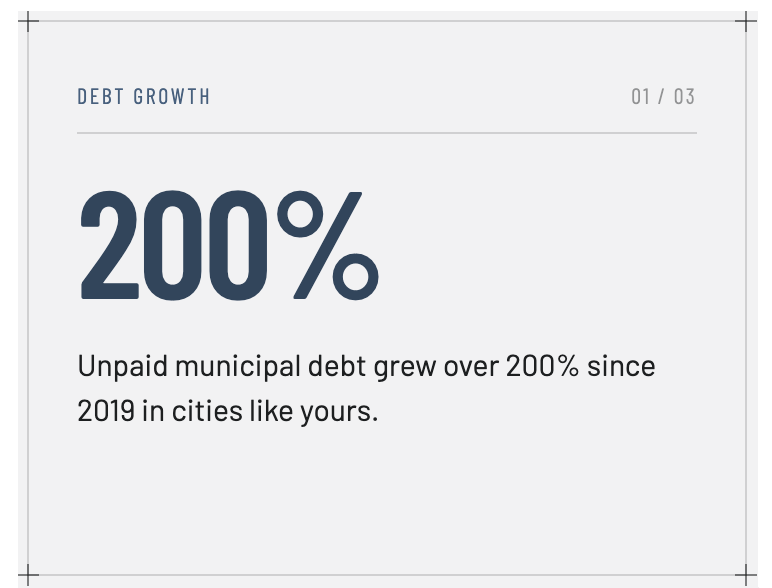
The debt crisis in local government is getting worse.
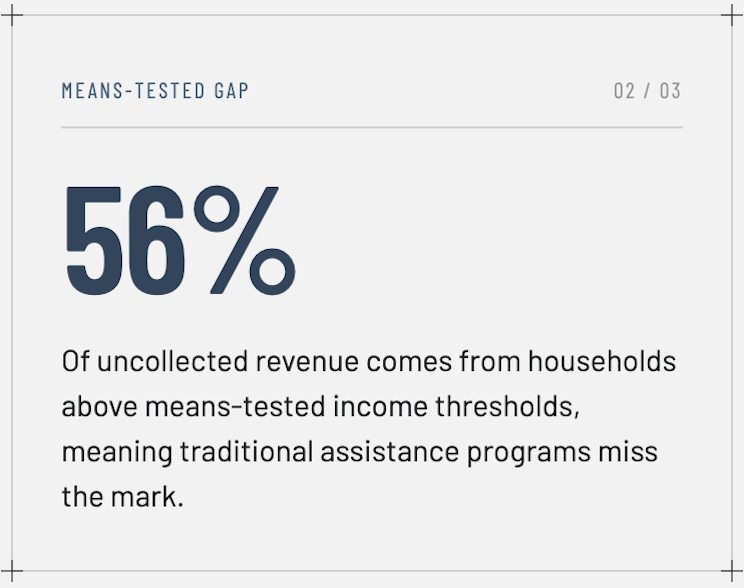
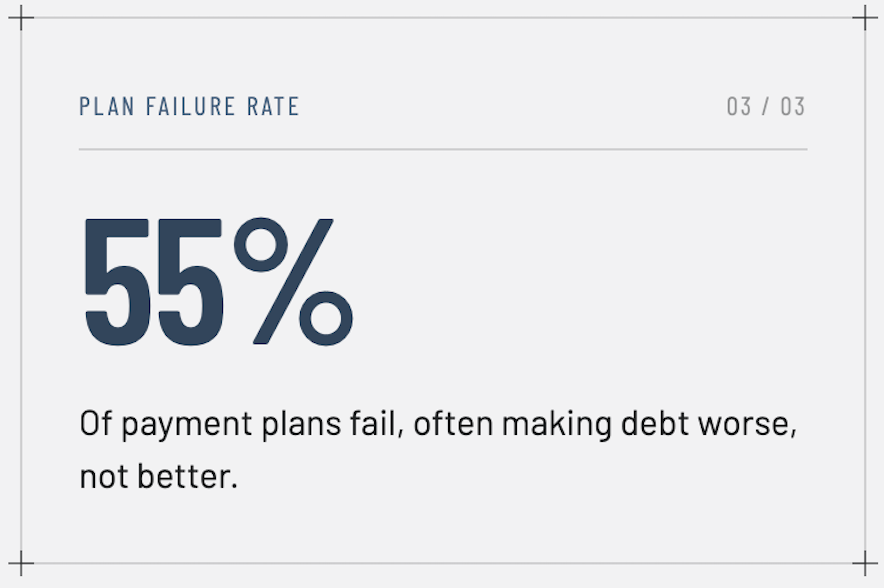
Cities keep raising rates and expanding assistance programs, yet collection outcomes often remain unchanged. The missing piece is better information about which residents can pay, which cannot, and what response will actually work
Solutions We Provide

Revenue Intelligence Platform
Surfaces account-level and portfolio-level insights
Helps cities understand where collections performance is breaking down
Supports defensible decision-making

Revenue Optimization
Assesses likelihood or ability to pay
Recommends or automates price adjustments / treatment assignments
Supports consistent, auditable account routing

Revenue Analysis and Deployment Support
Identifies where the biggest revenue opportunity exists
Helps scope pilots and measure outcomes
Supports rollout into city workflows
Cities typically begin with a bounded pilot to validate outcomes and fit before broader deployment
Who traditional assistance programs miss
Low- to middle-income households priced out of means-based programs are often the ones falling behind.
Director, Portland Water Bureau
What People Are Saying
Why California cities need a new approach to collections
After the pandemic, past-due balances grew from hundreds to thousands of dollars, more than a 12-month payment plan can resolve.
President, California Municipal Revenue and Tax Association
Utility Billing Manager, City of Santa Maria, California
Is ability-to-pay pricing fair?
Ability-to-pay pricing addresses two kinds of fairness: relief for those who need it, and everyone paying their fair share.
Senior Manager of Research, Government Finance Officers Association

Use data, not guesswork
Administrative burden and poor public perception stem from policy. Read more >>
Built for cities that want results but don't have room in the budget.
We work with municipalities that are serious about improving collections and expanding equity, but can't dedicate budget to another vendor with no guarantee of results.
Our partnership model means we only succeed when you do. There's no upfront cost and no setup fee. We structure our engagement around the outcomes we deliver together.
SERVUS works across utility billing, parking and traffic fines, court fees, permits, and other municipal revenue streams.
We've tried text message reminders and flexible payment plans, but they don't solve the core problem, people still fall behind and accumulate fees. We need something that actually helps our system recoup the funds we need to operate."
— City of Portland, OR Water Bureau Director
Cities that close the gap between what’s owed and what they collect share one thing in common. They understand who they are collecting from.
SERVUS provides automated affordability screening that assesses every payer's ability to pay using your city’s data. Not self-reported income or crisis-level thresholds.
Because of this, payment expectations are calibrated to what residents can realistically pay. More payers pay something. Fewer fall into permanent delinquency. Collections improve in aggregate, especially among delinquent accounts.
This isn't a manual process. SERVUS's software incorporates your objectives, does the screening, and responds with an adjustment, so cities can apply consistent, defensible collections standards across any revenue stream without adding administrative burden.
Cities can also determine if payers can pay above the current rates. That's not a collections tactic. It's rate policy grounded in data.

Our Partners



SERVUS works with cities to understand what their revenue data is actually telling them and help to redesign collections using evidence rather than assumptions.

Debt relief alone isn’t enough.
Although debt forgiveness can offer immediate support, it often provides only temporary relief. Many residents eventually fall back into debt because the deeper, structural causes of their unpaid debt remain unaddressed.
Outdated collection practices deepen the problem and conventional payment plans aren’t the answer.
Standard payment plans often ignore a person’s true ability to pay, allowing debt to snowball instead of resolve. Especially when ongoing charges outpace payment commitments.
FAQs
SERVUS Benefits
-
SERVUS helps cities identify delinquency BEFORE it occurs. Cities can use their own data to improve collections. More people will pay on time, which prevents payers from falling into debt. It's a win-win!
-
Cities need revenue to operate. When people don’t pay, more resources are directed at compliance. By adjusting the amount due for those who need assistance, it helps cities collect the money they need in a timely manner to provide services without creating extra hardship for anyone.
-
SERVUS uses data the city already has to figure out how much each person can afford to pay.
-
People who can afford to pay the normal price of their fines and fees will, and those who can't will get the appropriate financial assistance. This means the city collects more money, and fewer people fall into debt.
-
No. SERVUS helps cities prevent payers from becoming delinquent. We use data to identify who might need help and proactively offer personalized discounts or payment plans to make things more affordable. This leads to more on-time payments and avoids the need for debt collection.
-
It's important to understand that we don't actually charge anyone more than the standard fine or fee. That would be unfair. Instead, we help cities offer adjustments/discounts to those who truly need them. Think of it like other programs cities already have:
Property taxes: Seniors often get discounts.
Bus fares: The price varies for youth, adults, and seniors.
Amnesty programs: Cities sometimes reduce fines for people who couldn't pay them before.
Existing financial assistance: Many cities offer discounts on utilities or other services for those in need.
These programs are well accepted. Segmented pricing is a smarter version of these programs that helps ensure that everyone pays what they can reasonably afford. It's about making the system fairer, not charging some people more.
The key difference with SERVUS is that we use data to make sure the discounts are given out fairly and consistently. This helps cities avoid bias and make the best use of their resources. Ultimately, it's about creating a system where everyone is treated equitably, and no one faces undue financial hardship because of a fine or fee.
Alternative Rate Study services
-
Determine if you are accomplishing your goals or if your communities are having the proper outcomes.
-
Any consultant can provide you an analysis but we have the expertise to optimize both tiered and fixed rates. We utilize proven leading-edge technologies to measure payment propensity.
-
SERVUS has partnerships with universities and professional organizations to ensure rigorous and evidence-based implementations. We conduct field experiments to validate our approach.
-
Our flagship service offers your utility the ability to increase rates while insulating financially challenged ratepayers.